
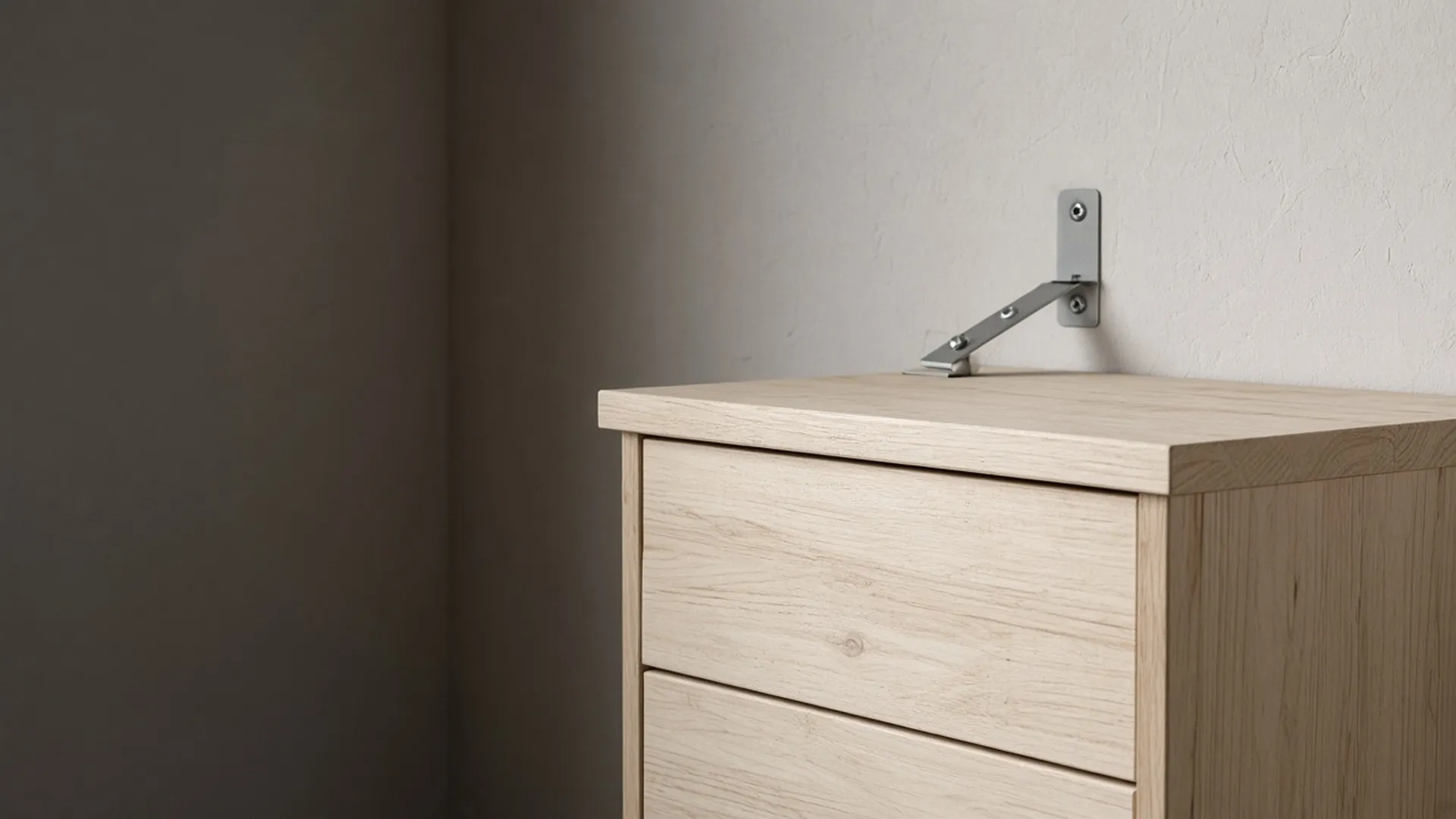
Anchoring furniture to the wall: what CPSC says
CPSC's Anchor It line for furniture with drawers, doors, and shelves.
Disclosure: We may earn a commission if you buy through links on this page. It does not change our guidance. Affiliate Disclosure
The CPSC line
CPSC says: "Anchoring all furniture with drawers, doors, and shelves to the wall prevents tip-over injuries and deaths." Follow the maker's instructions.
Finished or not
Anchor a piece whether or not it is finished. Finishing does not change CPSC's anchor line.
Kits that come with the piece
CPSC says clothing storage units covered by its rule must come packaged with an anti-tip device. Ask the maker what came with your piece.
Steps
We do not give anchoring steps. Follow the maker's instructions for the furniture and the kit. We do not say any kit suits your furniture or wall.
This is general information, not legal or safety advice.
Sources: CPSC, Anchor It; CPSC, Clothing Storage Units (Business Guidance).
FAQ
General information only. Follow every product label and increase ventilation when you finish, as EPA advises. State fire and health agencies warn that rags used with some oil-based stains and finishes can catch fire on their own: never leave them in a pile, and dry and dispose of them as the label and your local fire officials direct. CPSC says to anchor furniture with drawers, doors, and shelves to the wall. In an emergency, call 911.


Next: STURDY rule
16 CFR 1261, in CPSC words.
