
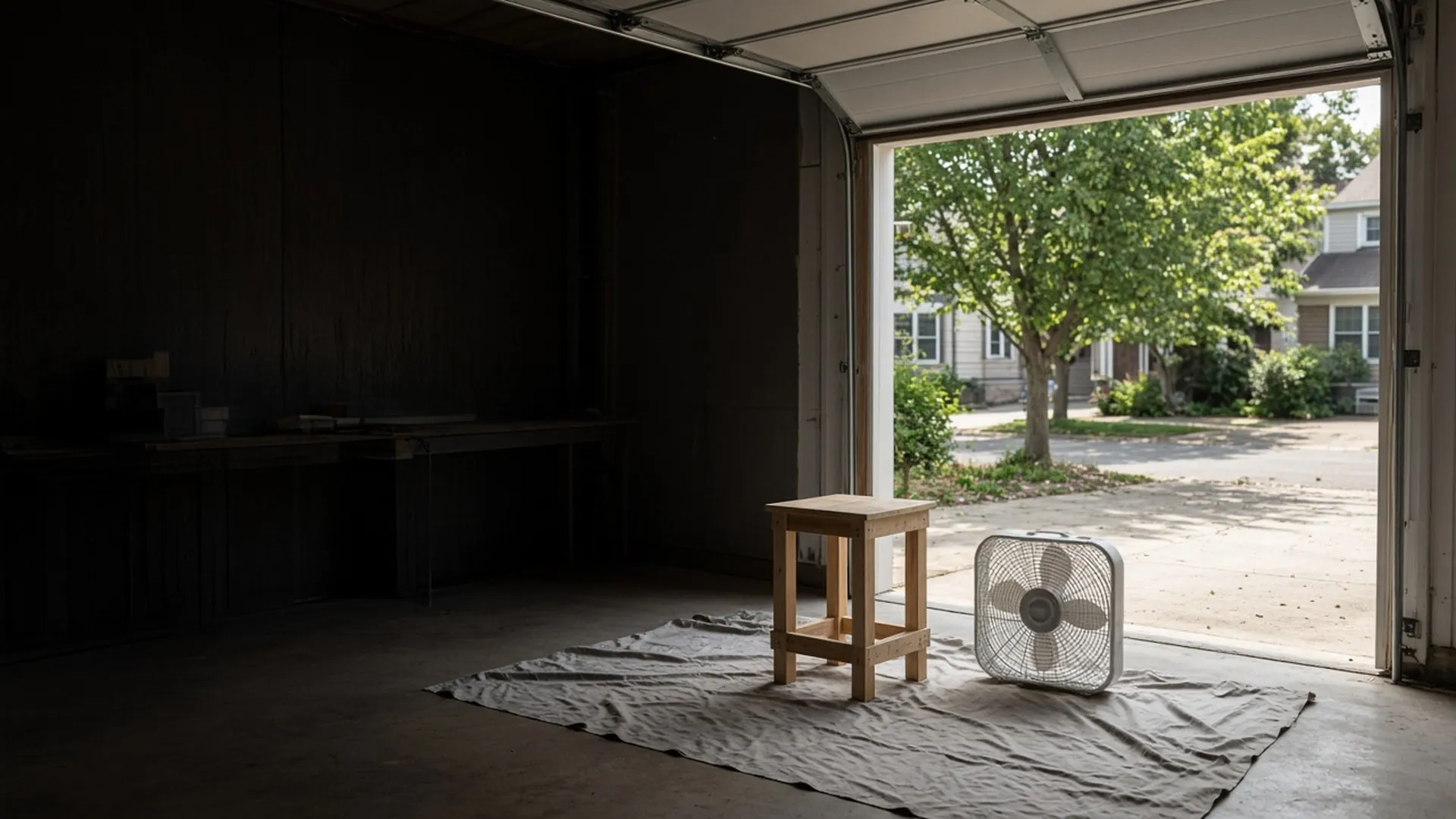
Finishing indoors or outdoors: what EPA says
EPA's line on outdoor work and exhaust fans, and what the label decides.
Disclosure: We may earn a commission if you buy through links on this page. It does not change our guidance. Affiliate Disclosure
The label comes first
EPA says to "Meet or exceed any label precautions." The label on each product says where and how to use it.
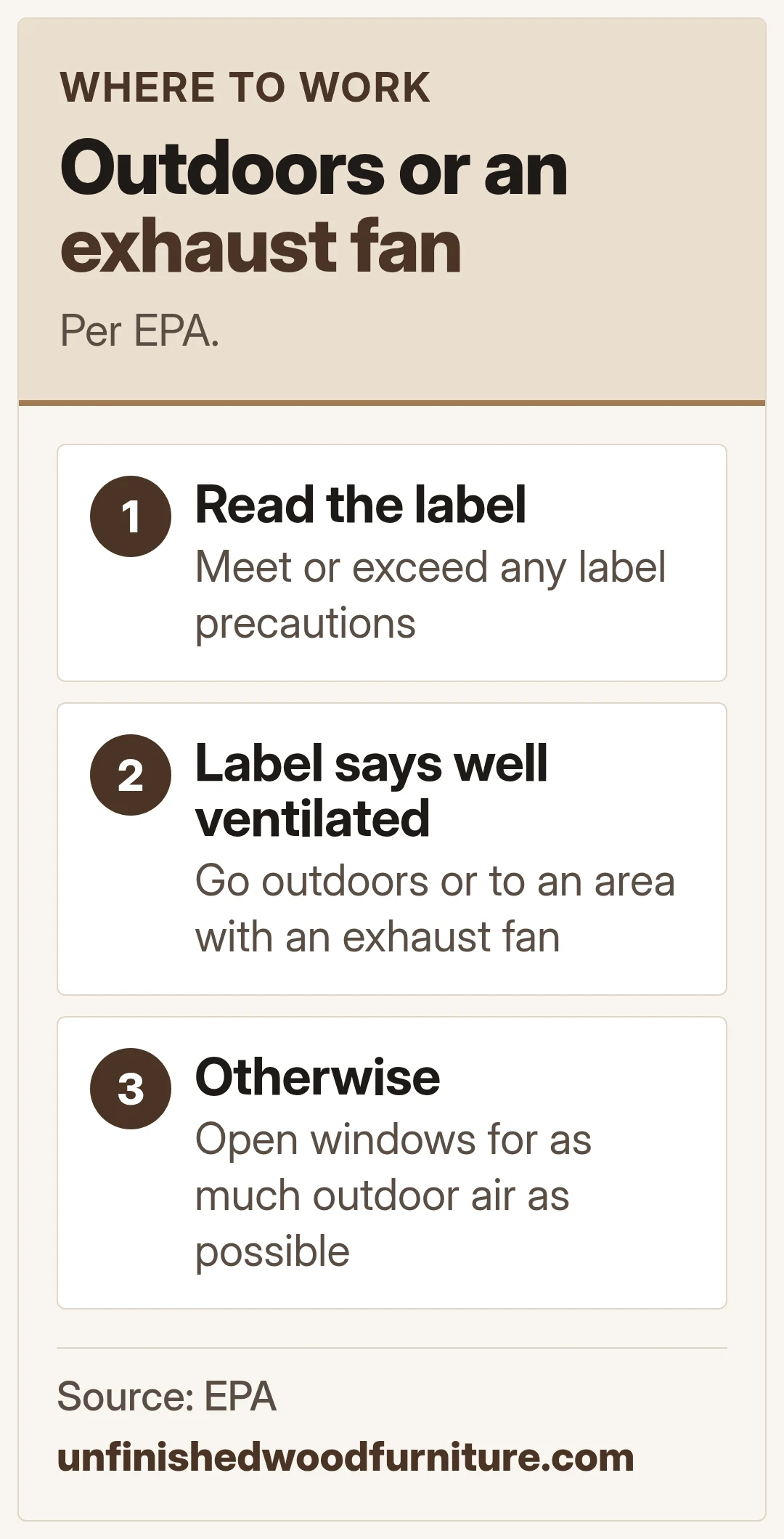
Outdoors or an exhaust fan
EPA says that if a label says to use the product in a well-ventilated area, "go outdoors or in areas equipped with an exhaust fan to use it."
Otherwise, open windows
EPA says: "Otherwise, open up windows to provide the maximum amount of outdoor air possible."
Stains and oil finishes
Massachusetts' Department of Fire Services says: "The oils in some paints, stains, and varnishes release heat as they dry. If oily rags and applicators are left in a pile, a box, or the trash, the heat can remain trapped and cause a fire that quickly spreads to nearby combustibles." Follow the label and your local fire officials.
What we do not say
We do not say any room, garage, or product is fine for indoor finishing.
This is general information, not legal or safety advice.
Sources: EPA, Volatile Organic Compounds' Impact on Indoor Air Quality; Massachusetts Department of Fire Services (mass.gov), Disposing of oily rags; Colorado Department of Public Health and Environment, Preparing products found in your garage for disposal.
FAQ
General information only. Follow every product label and increase ventilation when you finish, as EPA advises. State fire and health agencies warn that rags used with some oil-based stains and finishes can catch fire on their own: never leave them in a pile, and dry and dispose of them as the label and your local fire officials direct. CPSC says to anchor furniture with drawers, doors, and shelves to the wall. In an emergency, call 911.

Next: ventilation
EPA lines on airflow.
